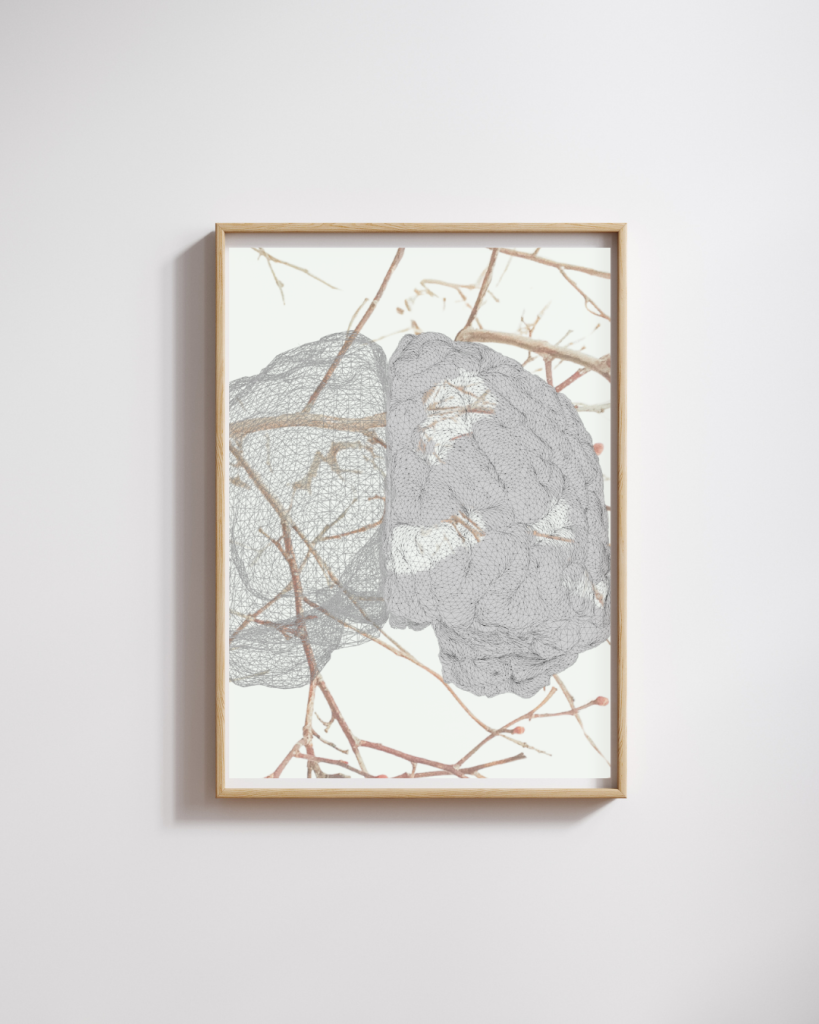
“Yesterday my body felt so open,
but this morning… it’s back again.”
Have you ever felt that way?
It’s not failure. It’s a sign that your nervous system is still learning.
The muscles aren’t “tight” again —
it’s just that your brain is still using its old map of posture.
The Brain Learns by Comparison
In the first two weeks of SenseBody practice,
your nervous system is drawing a temporary map of new movement —
like working in “RAM” before saving it to long-term memory.
During this stage, the body often replays old patterns.
When you feel like you’ve “gone back,”
your brain is actually revisiting those old routes to compare and confirm.
It’s not regression — it’s review.
Through this gentle back-and-forth between the old and the new,
the brain gradually selects and stabilizes the better pattern.
These fluctuations are the rhythm of learning.
Early and Late Phases of Neuroplasticity

Neuroplasticity — the process by which neural connections change —
unfolds in two stages: Early LTP and Late LTP
(LTP = Long-Term Potentiation).
- Early LTP lasts only a few hours to a day.
It’s like a temporary memory — a test run of new wiring. - Late LTP is the stage of structural change —
when new synaptic connections are physically formed,
turning temporary learning into lasting memory.
In other words, when changes fade overnight,
it’s not your muscles “returning,”
but your nervous system still being in the early phase of plasticity.
Reawakening the Inhibitory System
In SenseBody, movements such as pandiculation
help reactivate the body’s inhibitory system —
the network that tells the body when it’s safe to release effort.
As this system reawakens,
overactive γ-motor neurons calm down,
and the muscle spindles (stretch sensors)
lower their sensitivity to perceived “danger.”
The body begins to learn:
“It’s safe now. I don’t need to hold on.”
However, this state is temporary.
Without further practice,
the brainstem and cerebellum will revert to familiar patterns —
the reason you may feel that “it came back.”
Daily Practice Creates Structural Change
When the nervous system is re-stimulated
within 48 to 72 hours of initial activation,
short-term plasticity transforms into long-term structural change.
Only then do the new neural pathways consolidate,
and the body begins to remember its new posture.
This is why SenseBody recommends daily practice
in the early phase of re-education —
not as a matter of discipline,
but because it’s neurophysiologically the most efficient way
to help the brain reshape itself.
Trust the Body’s Learning Rhythm
When it seems like you’re “back where you started,”
remember — the brain is still learning who you’re becoming.
There’s no need to fight the fluctuation,
and certainly no reason for self-criticism.
Instead, observe it gently:
“My nervous system is drawing a new map.”
The body is learning — quietly, reliably.
Trust that rhythm.
Repeat with calm attention.
That is the surest path to complete neural re-education.
“Stability within motion. A body that stands with gravity, not against it.”
— SenseBody: Aligned with Gravity, Alive in Motion