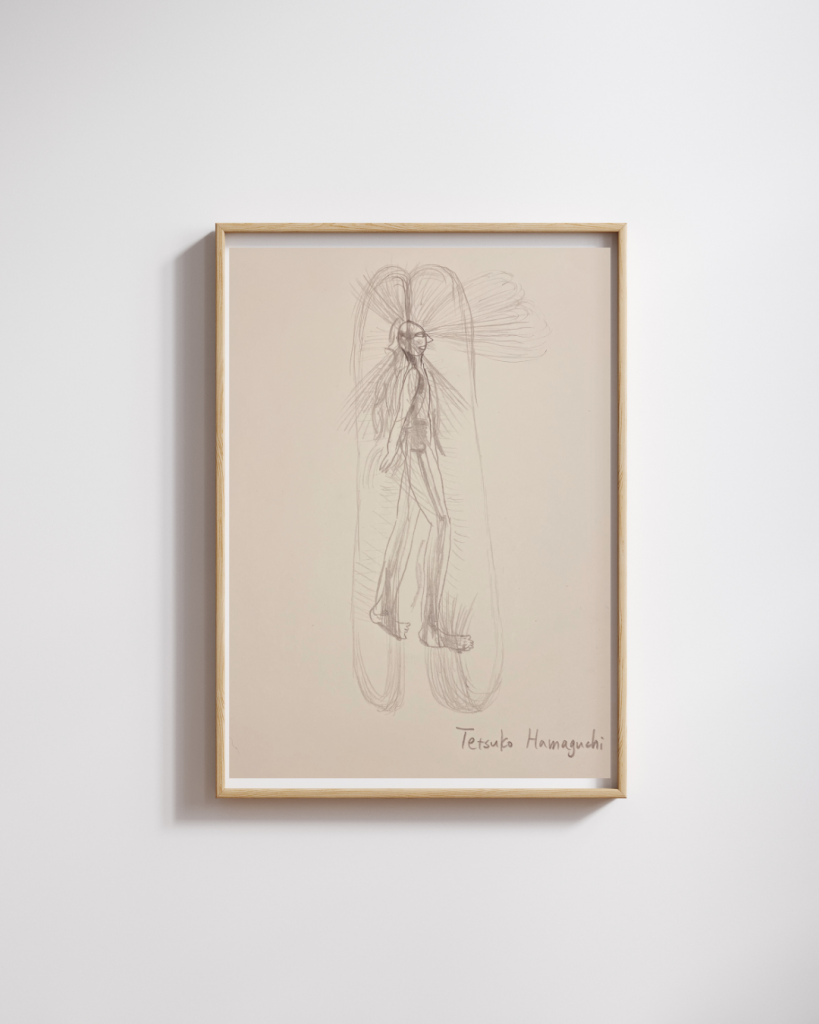
In the Foot Axis set of SenseBody Axis, there is a standing exercise called Axis Plié.
When practicing it repeatedly, you may suddenly notice that your visual field becomes brighter,
or colors appear to have more depth and clarity.
For a while, I continued observing this phenomenon through my own experience —
and recently, I finally found a research paper that addresses it.
(It’s no exaggeration to say I quietly squealed with joy!
I’ll introduce the paper at the end of this article.)
This is not “just your imagination.”
It is a neurological response.
A tiny movement of the ankles — just a few millimeters — and subtle gliding of the ligaments
can change how the world looks, through the vestibular nuclei and the visual system.
At SenseBody, we understand this effect as a function of the neural loop called
foot–vestibular–visual integration.
How Movement of the Talus Communicates With the Brain
How a Tiny Roll of the Talus Can Re-orient the Head
When the talus rolls slightly backward, the ligaments and joint capsule of the ankle — containing dense mechanoreceptors (around the talus, tibia, and fibula) — detect a subtle stretch.
This sensory information travels through the dorsal column of the spinal cord to the cerebellum and vestibular nuclei.
The vestibular nuclei are constantly monitoring the orientation of the head in space.
Signals from the talus help the brain make very fine adjustments.
As a result, even tiny shifts in head angle are corrected — helping keep the eyes level and the visual field clear.
This is one reason why small changes in the ankle during movement can produce noticeable changes in how you see the world.
Why Vision Feels Brighter
Three Physiological Layers of Change
1, Neural Regulation Layer
Input from the talus helps stabilize the vestibular nuclei, reducing “noise” sent to the visual cortex.
→ Improved contrast sensitivity, making the visual field feel brighter.
2. Oculomotor Layer
The vestibulo-ocular reflex (VOR) — often heightened in a “high-alert” state — becomes normalized.
→ Less visual blur, a wider field of view, and clearer depth perception.
3. Autonomic Nervous System Layer
Ground reaction sensing through the soles increases retinal blood flow via parasympathetic pathways.
→ Reduced light sensitivity and richer perception of color.
A small change at the ankle can reset
how the brain stabilizes the head,
how the eyes move,
and how the world appears.
The Study That Made My Heart Leap
Ivanenko, Y. & Gurfinkel, V. (2018).
Human postural control and movement: foot–vestibular–visual interactions.
Physiological Reports
This research demonstrates that human postural control depends on the integration of three directional inputs:
- Foot (proprioceptive input from the sole and talus)
- Vestibular system (orientation of the head in space)
- Visual system (spatial referencing in the visual cortex)
Sensory information from the foot — including signals from the talus — is transmitted to the vestibular nuclei,
where it is combined with visual spatial correction in the cortex.
Ivanenko writes that:
“The foot is not merely a support structure —
it is part of the brain’s equilibrium system.”
(Yes… I nearly shouted in celebration when I read this!)
This aligns beautifully with SenseBody’s Axis design and long-held observations from our own practice.
At the end of each SenseBody Axis session, we move into what we call the Integral Walk —
a time to allow all these sensory systems to come back into relationship.
In those moments, something shifts:
I become vividly aware of where I am
between left and right, up and down — within space itself.
It’s a subtle yet profound joy,
like experiencing the present moment with your whole being.
The Foot Is Not a Structure — It Is a Sensor
The foot does not “hold up” posture as a mechanical base.
Instead, it tells the nervous system which way gravity is pulling.
In the Axis Plié, the head — sacrum — talus work together as one vertical axis.
A tiny roll of the talus influences the vestibular nuclei,
which then adjust how the visual system interprets the world.
In that moment,
contrast shifts.
The world becomes slightly brighter.
That is the sign that SenseBody re-education has begun.
Your feet are packed with sensory receptors.
So tomorrow morning, before the day begins:
Take your first step with awareness.
Let the information travel
from the soles of your feet
to the crown of your head.
Feel yourself entering the day
not unconsciously — but fully alive.
“Stability within motion. A body that stands with gravity, not against it.”
— SenseBody: Aligned with Gravity, Alive in Motion