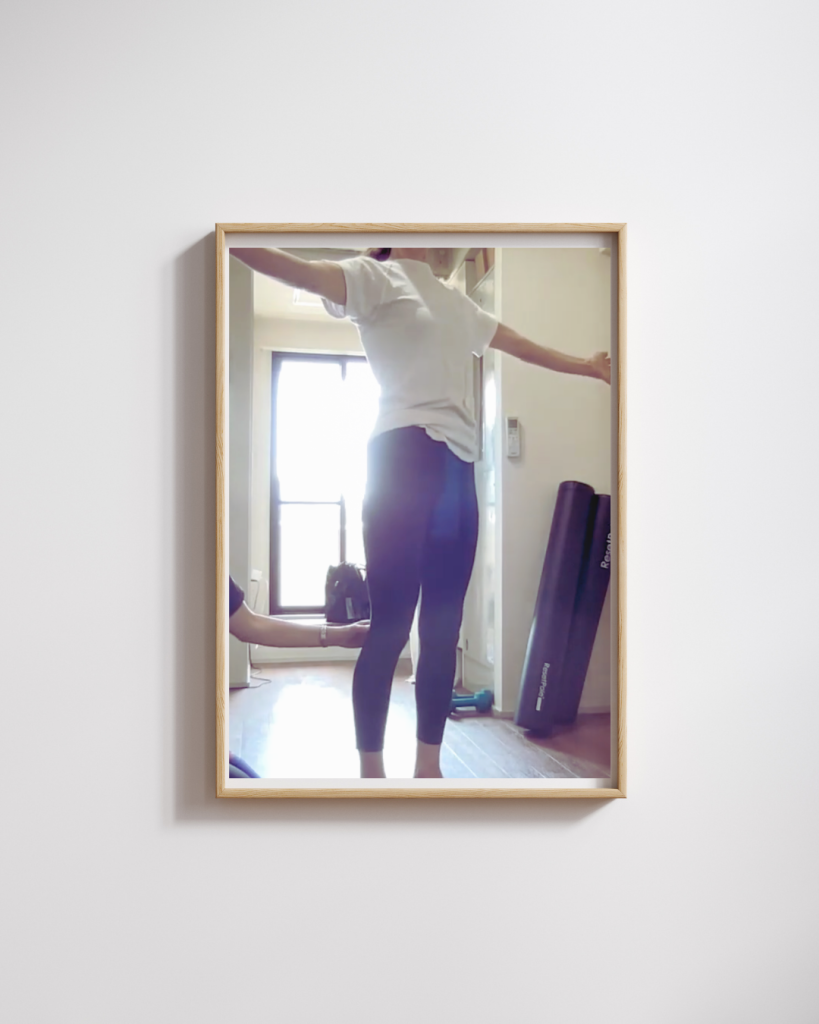
Many athletes encounter a common barrier when they try to reform their movement patterns or change the way they use their bodies.
It is the experience of feeling better at first—only to find that once movement begins, old patterns quietly return.
At that point, many people start to wonder:
“Maybe I can no longer tolerate the same level of load as before.”
“With this body, is it really possible to move again?”
These concerns are completely natural.
However, this phenomenon is not something that can be solved through willpower or unfocused effort.
When we understand how the nervous system works—and move through the process step by step—it becomes possible to perform comfortably with a completely different quality of movement and neural state than before.
In this article, I will explain—clearly and simply—the essential transition process from Axis to movement as practiced in SenseBody’s Somatic Pilates.
Why the Body “Returns” When You Start Moving—Even After Axis
As you continue with Axis, many people notice meaningful changes:
- Standing feels easier
- Pain or discomfort becomes quieter
- Breathing returns to a more natural rhythm
And yet, once movement is reintroduced, it is very common to hear:
“My old habits and twists came back.”
This is not regression.
The Body Learns Differently in Stillness and in Movement
What Axis cultivates is neural stability in stillness.
But when we begin to move, the nervous system often defaults to movement patterns that have been used for many years—patterns that are deeply familiar, even if they are no longer efficient.
In other words, many people are at this stage:
- They have found a more organized, comfortable state
- But they have not yet practiced moving while staying in that state
Somatic Pilates Is Not About “Training” the Body
SenseBody’s Somatic Pilates is not designed to:
- Build muscle strength
- Teach “correct” form
The purpose is very simple:
To cultivate a nervous system that can return to the Axis state—even after movement.
What We Emphasize in Phase 1
In this phase, we intentionally avoid:
- Large movements
- Increasing repetitions
- Pushing or striving
Instead, we carefully observe:
- How you feel when you stand after moving
- Whether your breath and gaze remain free
- Whether your body naturally reorganizes itself
From “Being Able to Move” to “Not Falling Apart”
Rather than a body that can do a lot for a short time,
we aim for a body that:
- Does not twist under small loads
- Does not overreact to changes in environment
- Can naturally reorganize itself after movement
This is what allows activities like swimming, hiking, dance—and everyday movement—to be enjoyed over the long term.
Axis → Movement → Axis
In Somatic Pilates, we work with a sandwich structure:
Axis → Movement → Axis.
Somatic Pilates is not exercise meant to “protect” the body you refined through Axis.
It is a process of relearning how to move while staying organized.
If you:
- Have felt real change through Axis
- But feel uncertain about returning to movement
- And do not want to repeat old pain or patterns
Then this transition phase may be a very important next step for you.