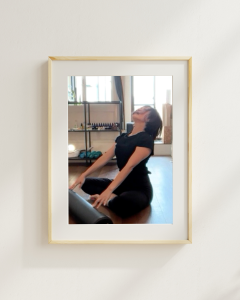
When engaging in the process of neural re-education,
it’s important to understand how and when to reintroduce physical exercise.
Many of my clients deeply value their daily training routines —
weight training, running, or other forms of conditioning.
Because this is often a sensitive topic,
I’d like to offer a clear explanation,
so that you can progress safely and constructively,
without unnecessary setbacks.
Postural Change Arises from Neural Reorganization
Lasting postural change doesn’t come from muscle strength alone.
It emerges when neural plasticity rewires the movement patterns themselves.
Neural plasticity unfolds in stages:
- Early LTP (short-term plasticity) fades within hours to a day.
- Late LTP (long-term plasticity) requires about two weeks to three months for stability.
During this time, the brain is still testing which movement pattern to keep.

The Risk of Overloading Too Soon
Introducing heavy workouts or running too early can reactivate old patterns.
The brain tends to choose “previously successful” motor pathways
as a safer, more familiar option.
In neurorehabilitation, this is known as maladaptive plasticity —
when the nervous system, still mid-learning, reverts to old wiring.
The Principle of Learning in Stillness
In SenseBody, we intentionally focus on static re-education during this period—
through breath, grounding, sensory awareness, and inhibitory control.
Only after these new circuits have stabilized
do we gradually reintroduce strength or endurance training.
“Stability within motion. A body that stands with gravity, not against it.”
— SenseBody: Aligned with Gravity, Alive in Motion